While “king tide” isn’t a strict scientific term, it’s widely used to describe exceptionally high spring tides. These happen when the moon and sun align in such a way that their combined gravity pulls the ocean to its highest highs.
In Southern California, including Imperial Beach, king tides happen a few times each year. According to local tide forecasts, high tides can reach around 7 feet, compared to the more typical 4–5 foot high tides.
2025 King Tide Outlook for Southern California
The California King Tides Project lists November 6, 2025 and December 6, 2025 as King Tide dates for some Southern California locations.
Additionally, December 4–5, 2025 and January 2–3, 2026 are major King Tide event dates.
UPDATE: In February 2025 construction crews started removing and breaking down the garden spaces for an upcoming bridge project south of North Beach. It has yet to be determined what has happened to the painted memorial rocks that were placed at Gwen;s Garden.
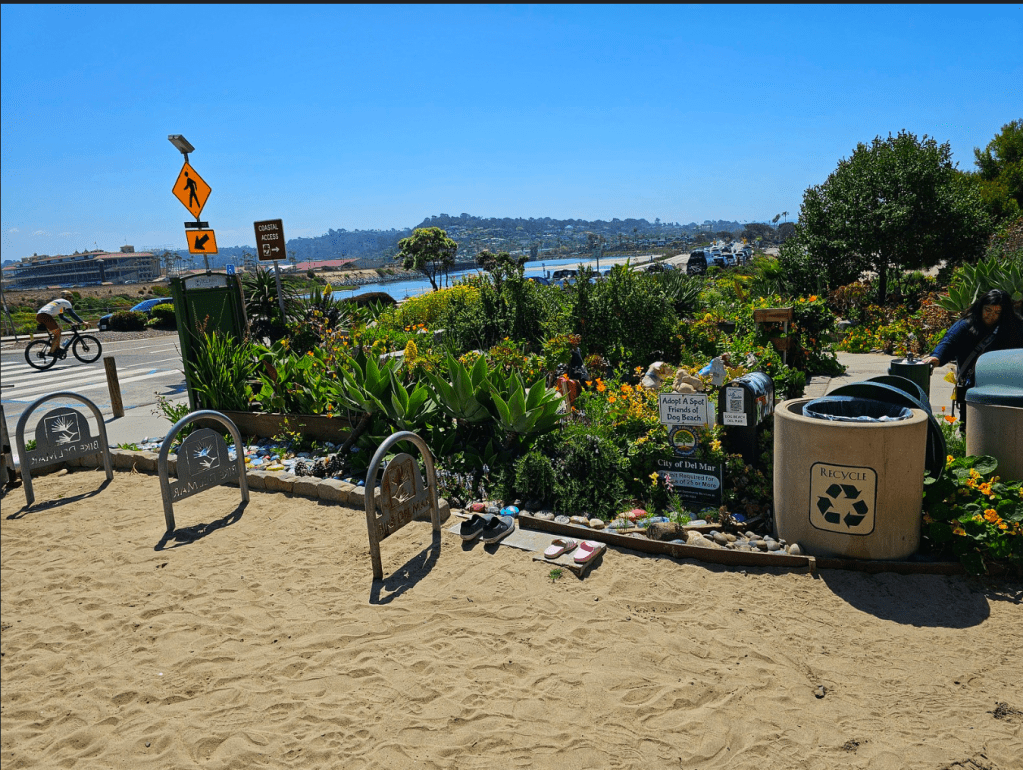
Sometimes, the most special places aren’t grand landmarks, but small pockets of community heart, grown organically from love and dedication. For years, Gwen’s Garden, also known as the Dog Beach Memorial Garden, was exactly that – a unique and touching oasis located not in Solana Beach itself, but right at the entrance to the famous Del Mar North Beach (Dog Beach), which sits just south of the Solana Beach border.
While visitors flocked to the wide sands for off-leash fun (seasonally permitted!), many discovered this unexpected gem near the access path. But like many grassroots projects, its story has recently taken an uncertain turn.
The Story Behind the Garden
Gwen’s Garden wasn’t designed by a committee; it was born from the love of one man for his dog. Local Del Mar resident Jimmy Joe Gooding started the garden in memory of his beloved yellow Labrador, Gwen, who adored her daily visits to Dog Beach.
Seeing the entrance area as neglected, Mr. Gooding took it upon himself to clean it up and plant flowers and succulents, initially using his own resources. What started as a personal tribute and a beautification effort under Del Mar’s “Adopt a Spot” program blossomed into something more.
A Tapestry of Love and Remembrance
Over the years, Gwen’s Garden became a cherished landmark. It featured:
A Winding Path: Guiding visitors through the small plot.
Lush Greenery: A mix of succulents, wildflowers, and eventually, efforts to include native species.
Whimsical Touches: Visitors often found little statues – dogs, angels, gnomes – tucked among the plants.
Painted Rocks: This became the garden’s most poignant feature. Hundreds of smooth stones, lovingly painted by visitors with the names and paw prints of their own departed canine companions, lined the path and filled the spaces.
A Sense of Peace: It was a quiet spot for reflection, remembrance, and appreciating the simple, powerful bond between humans and their pets.
An Uncertain Present
Gwen’s Garden represented community spirit, but it also faced challenges. Located on state land, the garden ran into permitting issues with the Coastal Commission, particularly regarding non-native plants and unpermitted structures like pathways.
Crucially, reports surfaced in early 2025 suggesting the garden had been significantly altered or possibly removed.Reasons cited included these ongoing permitting issues, potential safety concerns, and the land possibly being needed for future construction related to a nearby bridge project.
While the exact status today is difficult to confirm without visiting, photos and discussions from that time indicated the area may have been cleared, with the fate of the hundreds of memorial rocks uncertain (perhaps moved to storage or an exhibit).
The Enduring Spirit
Whether Gwen’s Garden exists today in its previous cherished form or not, its story remains a testament to:
The Love for Pets: A powerful motivator for creating beauty and community.
Individual Action: How one person’s dedication can create something meaningful for many.
Shared Remembrance: The comfort found in sharing grief and happy memories in a dedicated space.
Visiting Del Mar Dog Beach Today
If you visit Del Mar North Beach (Dog Beach), the beautiful stretch of sand where dogs can run free (seasonally off-leash, check rules!) is still there. However, be prepared that the specific memorial garden area at the entrance may look very different from photos and descriptions from previous years.
Gwen’s Garden was a special place born from a simple idea: honoring a beloved companion. While its physical form may be subject to change, the love and memories it represented undoubtedly linger in the sea air for all who knew it.
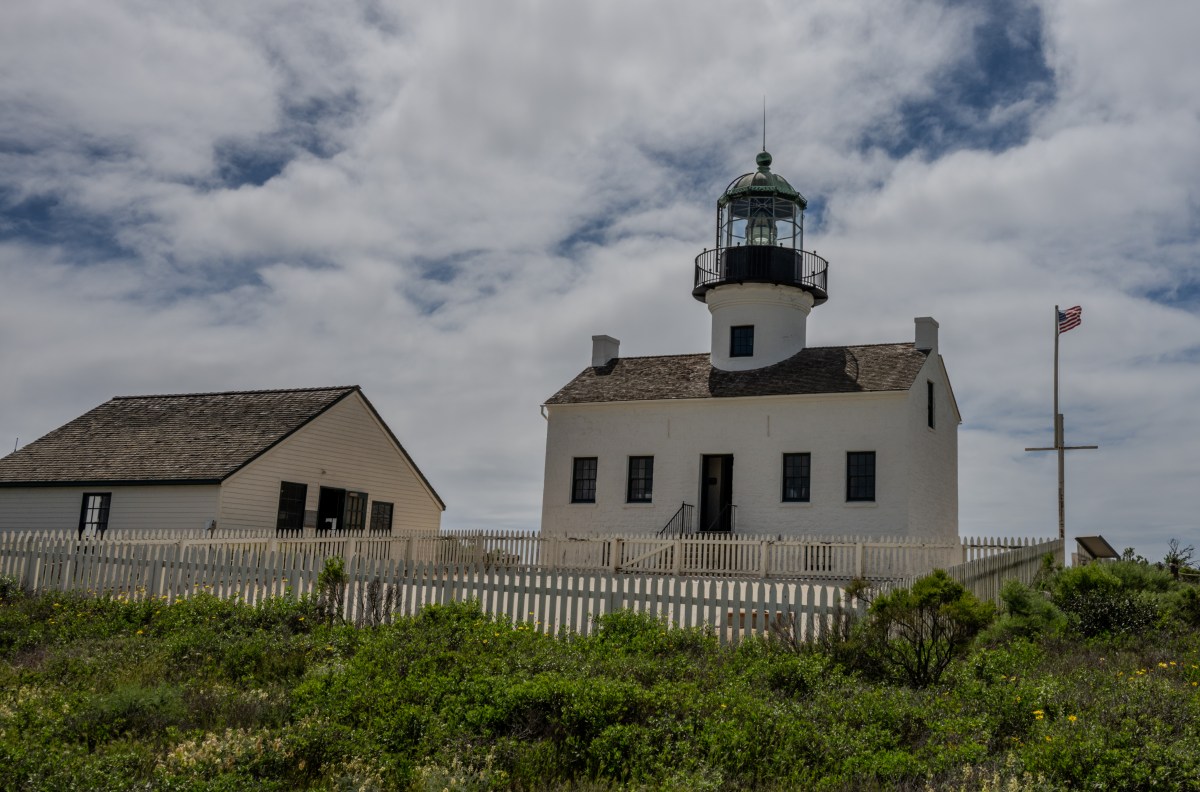
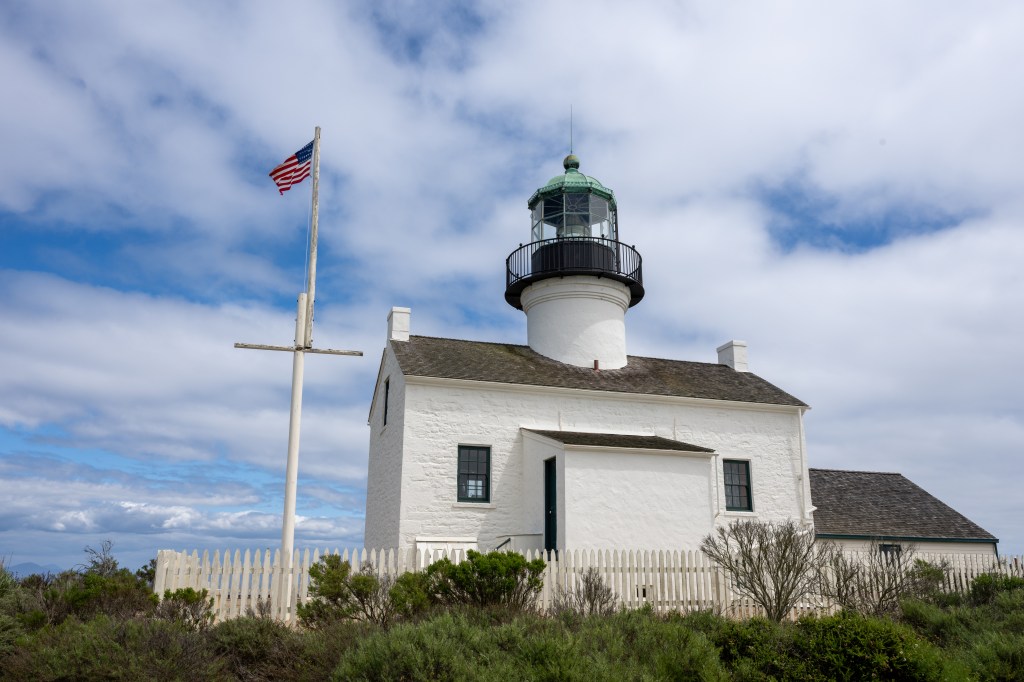
Perched high atop the rugged cliffs of Point Loma, overlooking the vast expanse of the Pacific Ocean and the bustling San Diego Bay, stands the iconic Cabrillo National Monument and its crowning jewel: the Old Point Loma Lighthouse. This historic beacon, a silent sentinel of the sea, offers not just breathtaking views but a glimpse into the rich maritime history of Southern California.
A Light in the Darkness:
Built in 1855, the Old Point Loma Lighthouse was one of the earliest lighthouses on the West Coast. Its purpose was simple yet vital: to guide ships safely into San Diego Bay. For 36 years, its powerful beam cut through the darkness, warning sailors of the treacherous coastline.
However, its elevation, while scenic, proved problematic. Fog and low clouds often obscured the light, rendering it ineffective. In 1891, the lighthouse was decommissioned, and a new, lower-elevation lighthouse was built closer to the water’s edge.
More Than Just a Lighthouse:
Today, the Old Point Loma Lighthouse stands as a museum, offering visitors a fascinating look into the lives of the lighthouse keepers and their families. Stepping inside, you’re transported back in time, experiencing the simple yet demanding life of those who dedicated themselves to keeping the light burning.
The Keeper’s Quarters: Explore the restored living quarters, furnished as they would have been in the late 19th century. Imagine the isolation and the constant vigilance required to maintain the light.
The Tower Climb: Venture up the winding staircase to the lantern room, where the Fresnel lens once shone brightly. While the original lens is now on display at the visitor center, the panoramic views from the tower are nothing short of spectacular.
The Panoramic Views: Beyond the historical significance, the Cabrillo National Monument offers some of the most stunning vistas in San Diego. From the lighthouse grounds, you can see the city skyline, Coronado Island, the vast Pacific Ocean, and even migrating whales during certain seasons.
Cabrillo National Monument: A Broader Historical Perspective:
The lighthouse is just one part of the Cabrillo National Monument. The monument also commemorates Juan Rodriguez Cabrillo, the first European to set foot on what is now the West Coast of the United States. In 1542, Cabrillo’s expedition landed in San Diego Bay, marking a significant moment in California’s history.
The Cabrillo Statue: A large statue of Juan Rodriguez Cabrillo overlooks the bay, a testament to his historic voyage.
The Tidepools: Down the hill from the lighthouse, the rocky tidepools offer a unique opportunity to explore the diverse marine life that thrives in this coastal ecosystem.
The Bayside Trail: This trail offers fantastic views of the bay and the city.
Planning Your Visit:
The Cabrillo National Monument is open daily, with varying hours.
There is an entrance fee to the monument.
Be prepared for windy conditions, especially at the higher elevation.
Wear comfortable shoes, as there is some walking involved.
Bring a camera to capture the breathtaking views.
A Timeless Treasure:
The Cabrillo Lighthouse is more than just a historical landmark; it’s a symbol of perseverance, dedication, and the enduring connection between humanity and the sea. Whether you’re a history buff, a nature enthusiast, or simply seeking a stunning view, a visit to the Cabrillo National Monument and its iconic lighthouse is an experience you won’t soon forget. It’s a reminder of the past, a celebration of the present, and a window to the vast and ever-changing beauty of the Pacific Coast.















 Exploring San Diego