
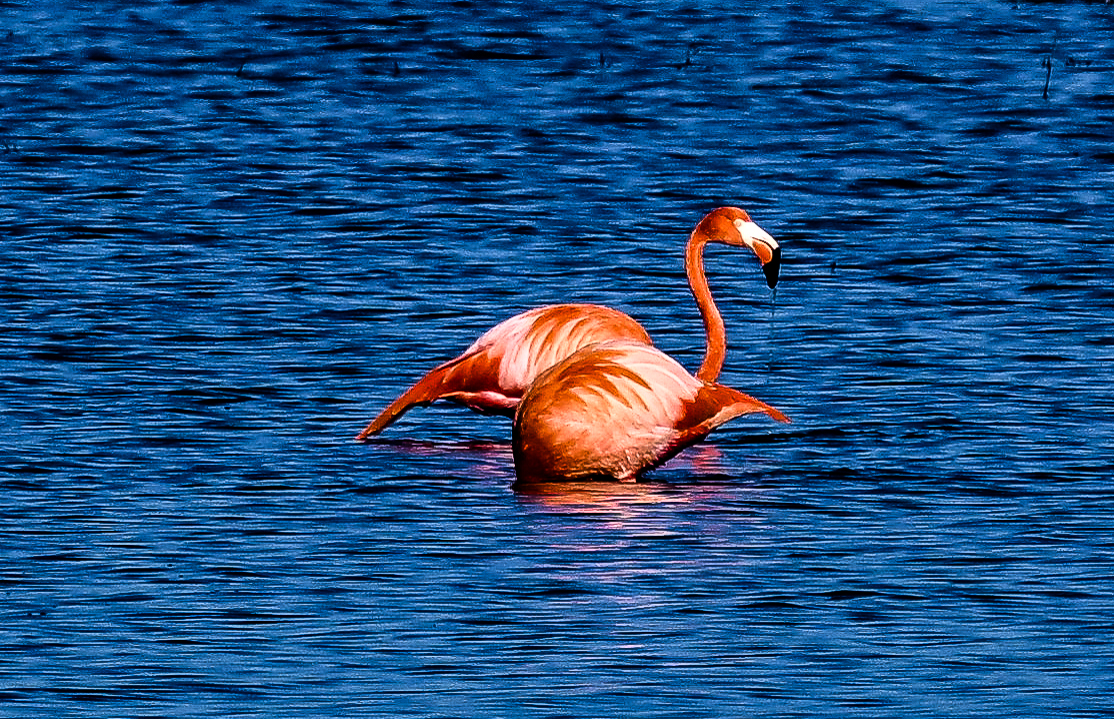
San Diego Bay is home to more than 300 bird species throughout the year, but flamingos are not among the region’s native wildlife. Still, on rare occasions, observers have reported flamingos along the bay’s shallow edges, drawing attention from birders and curious onlookers alike.
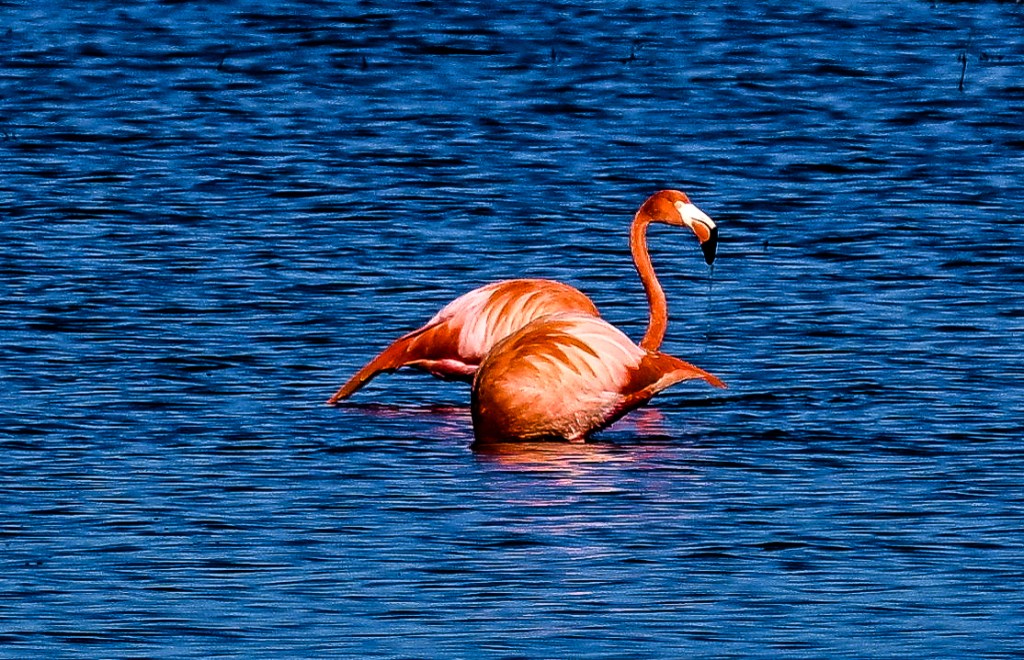
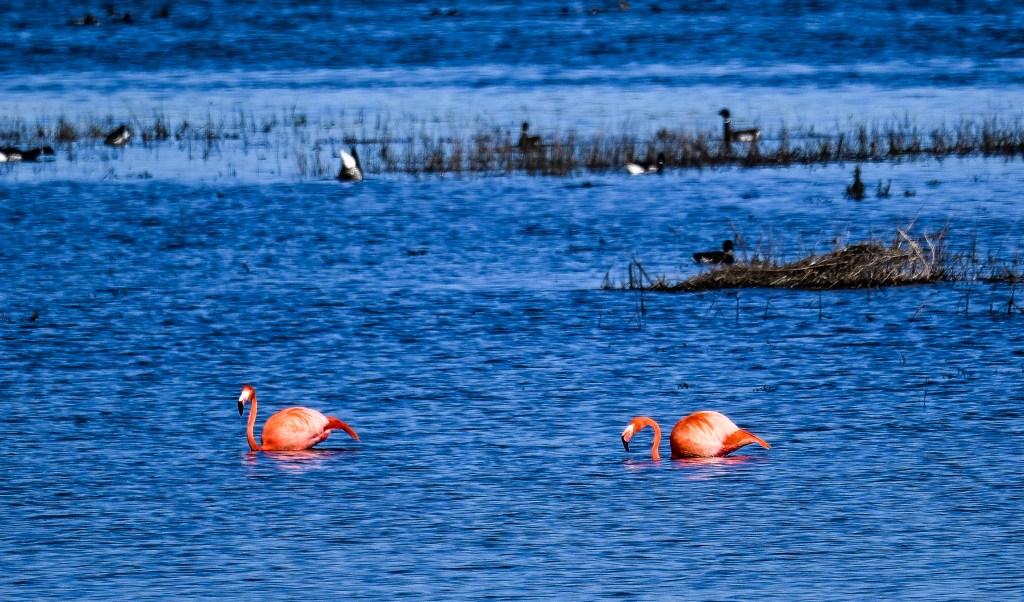
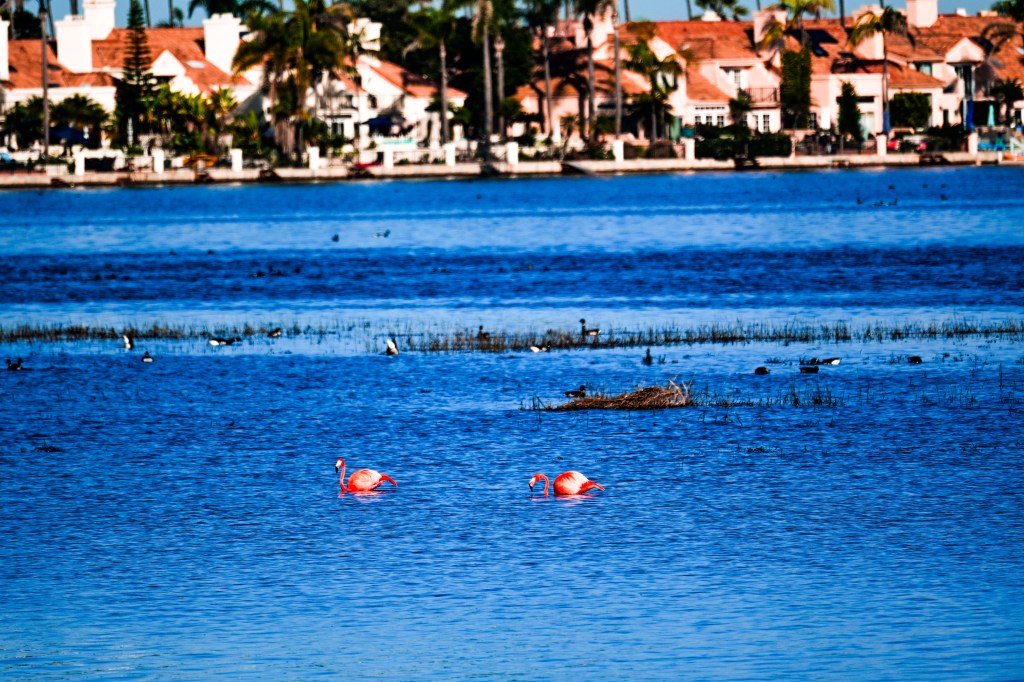
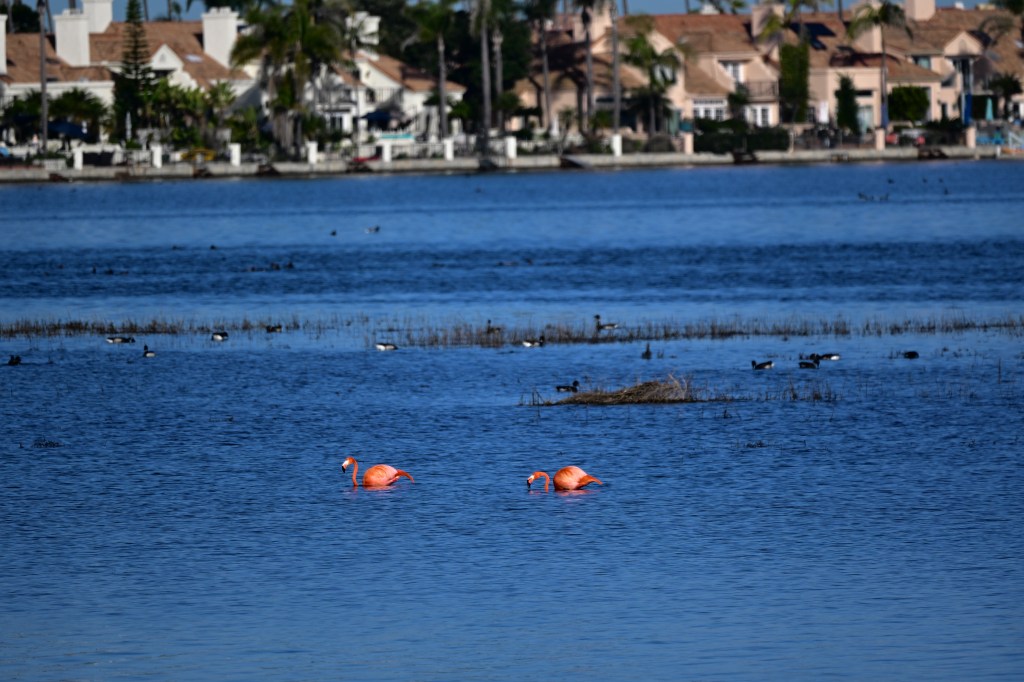
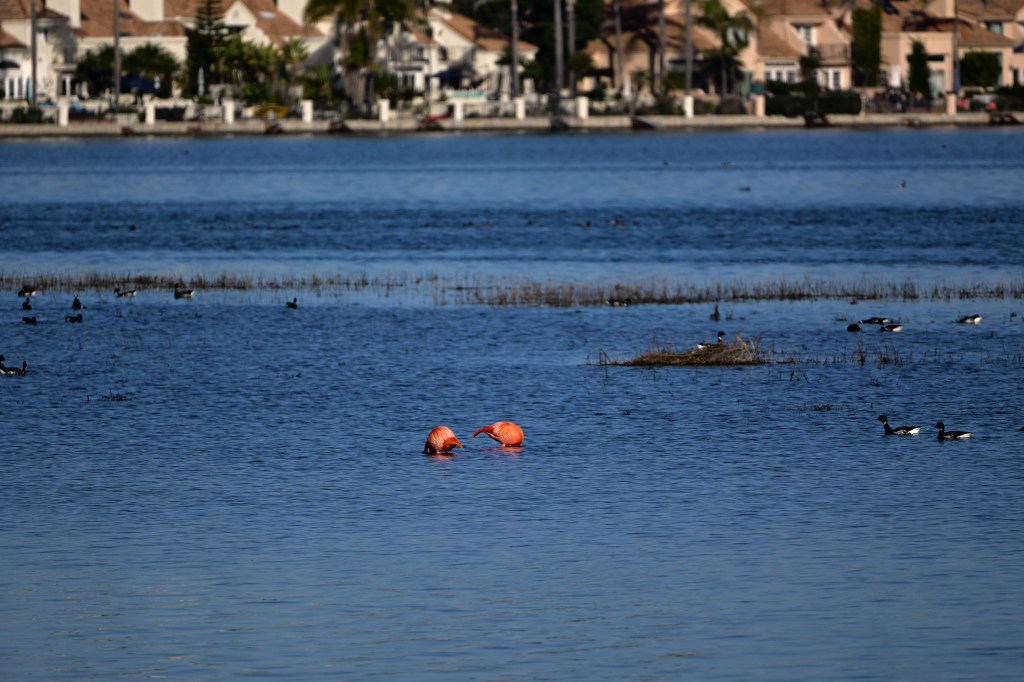
These sightings, while unusual, are not without explanation. Over the weekend I was driving southbound on State Route 75 from Coronado to Imperial Beach when I spotted 2 pink dots off to my left in the marsh shallows. I turned around in Imperial Beach, headed north to the Bike Path parking lot accessible from NB 75. And walk north for about 15min to find the two flamingos about 200 yards off shore. It was High Tide at the time which flooded the shallow marsh and coaxed the flamingos and other shore birds closer to shore.
Not Native, but Occasionally Present
Flamingos do not naturally occur in Southern California. Their typical range includes the Caribbean, parts of South America, Africa, and the Galápagos Islands. Experts generally agree that flamingos seen in San Diego County are likely birds that escaped or dispersed from captive populations rather than true wild migrants.
In the mid-20th century, flamingos were commonly kept in open-air zoo exhibits and private collections. Some individuals were able to fly beyond their enclosures and settle into nearby wetlands. A small number adapted to local conditions and remained in Southern California for extended periods, occasionally appearing in bays, lagoons, and salt ponds.
Habitat Conditions in San Diego Bay
Despite its urban setting, San Diego Bay contains habitat features that can support flamingos. Shallow waters, mudflats, and salt ponds provide feeding opportunities similar to those found in the species’ native environments. Flamingos feed on algae, brine shrimp, and other small invertebrates, filtering food from the water using specialized bills.
The bay’s salt works and managed wetlands, particularly in the southern portion of the bay, offer stable water levels and limited wave action—conditions suitable for wading birds that rely on calm, shallow areas.
Public Interest and Documentation
When flamingos appear in the bay, the sightings are typically well documented. Photographs and field notes are often shared through birding networks and community science platforms, where experts review and confirm observations. These records help distinguish between escaped birds, long-term residents, and misidentified species.
While flamingos attract attention, wildlife officials generally discourage close approaches. Maintaining distance reduces stress on the birds and minimizes the risk of disturbance to surrounding wildlife.
A Reminder of the Bay’s Ecological Value
Though flamingos are not part of San Diego Bay’s native ecosystem, their presence highlights the importance of coastal wetlands. The same habitats that occasionally support a flamingo also sustain migratory shorebirds, waterfowl, and endangered species year-round.
Even rare and unexpected sightings underscore the bay’s role as a critical refuge in a heavily developed region—one that continues to support a wide range of avian life.
 Exploring San Diego